Probably one of the biggest challenges of learning Japanese is studying and remembering all the kanji characters that it is written with. Oddly though, I always found learning the kanji to be one of the most interesting and enjoyable aspects of studying Japanese.
I want to share with you here the methods and approaches that I found most effective when studying kanji. I should mention that towards the end of the article there are some affiliate links among the “useful resources” mentioned, from which I may earn a commission from qualified purchases.
Before we start, here’s what you need to know:
Kanji are Chinese characters that were first introduced into Japan in the 5th century. There are 2,136 official jōyō kanji (regular use characters) which you will need to study if you want to be able to read Japanese. Although kanji are an absolutely fascinating aspect of the Japanese language, for many language learners this part of their studies is the most overwhelming. So how should you approach this task? Here are some tips.
1. Understand the Challenge
If you want to study kanji you need to understand how these Chinese characters work in Japanese. When each kanji was adopted into Japanese it retained its original Chinese pronunciation, but it also became associated with native Japanese words of the same meaning. This means that most kanji have at least two ways of being read: an onyomi or Chinese reading and a kunyomi or Japanese reading. For example the kanji for “mountain” is 山 which has an onyomi: san, and a kunyomi: yama. Which reading is used depends on how the kanji is used in a word or sentence. To complicate matters more, some kanji were introduced repeatedly and may have multiple onyomi readings which depend on the period of their introduction and the area of China from which they were introduced.
So before you start, you need to realize that you have quite a big mountain to climb and (despite what some may say) there are no shortcuts to the top! But once you’ve accepted that, you can learn the kanji and their readings at a reasonable pace and maybe like me you can enjoy it too!
2. Learn the Radicals
All kanji are built from component elements called radicals. The good news is that there is a limited number of radicals. If you learn to recognize the 214 traditional radicals, then it will become a lot easier to learn the kanji. They will no longer appear like a bunch of random patterns but as unique combinations of familiar elements.
3. Create Your Own Mnemonic System
Once you have learnt the radicals, you can use them to create short mnemonics which will help you remember each kanji. For example, supposing you know that 日 = day and 生 = birth. When you encounter the kanji 星 which means star, you can easily break it down into its separate components and create a short memorable sentence such as: “On this day a STAR is born.” Many kanji textbooks and study systems include such mnemonics, but the easiest ones to remember are the ones you create for yourself.
4. How to Use Flashcards
Flashcards, whether they are digital or written by hand, can be useful in the short term for picking up basic kanji, learning the radicals, expanding your general vocabulary, and studying for tests. However, you should not rely on flashcards alone as a means for studying kanji. The sheer number of cards that would be necessary would render that impractical, but there are other reasons which we shall explore below.
5. Context is Everything
How a kanji is pronounced and what it means is highly context dependent. For this reason, any study system that involves studying each kanji in turn, one-by-one, isolated and abstracted from context is not going to work. Memorizing over 2,000 kanji like that is not only extremely tedious, but even if you can memorize all the individual kanji meanings and readings, you will not understand how they work in practice. You will not be able to read.
Kanji on their own can be read in different ways, and with different shades of meaning which may only be apparent within the context of a sentence. However, kanji can also be joined with other kanji to form new compound words with meanings that might be hard to guess from their individual meanings.
For example, let’s look at the kanji 行. It has a relatively simple structure, a basic meaning of “go”, and a number of possible readings. Written 行くit can be read as iku (or yuku) and means “to go,” written 行う it is read okonau and means “to do”. So far so good – but then come the compounds! The kanji compound 銀行 is read ginkou and means “bank”, while the kanji compound 行政 is read gyousei and means “administration”, and 刊行 read kankou means “publication.”
This is a level of detail that you will not be able to fit on the back of a flashcard! Nor will you be able to memorize it with the much-hyped Spaced Repetition System. The best way to acquire all these alternative readings and meanings is to encounter them naturally in context.
6. Read
You should read and read a lot. This is the single most important thing you can do to expand your kanji comprehension. You can start with simple readers aimed at language learners, or manga comics, or children’s books and then work your way up to more difficult materials. Just find something you enjoy reading and keep at it every day. With memorable contexts the kanji will stick in your mind forever.
7. Read Your Environment
If you live in Japan, make a note of all the kanji you see in your neighborhood, and on your regular route to work or to the local supermarket. Look them up and learn what they mean. If you see these kanji every day in a real life context, they will be hard to forget. If you don’t live in Japan, you can try labeling all the objects and furniture in your house with sticky notes on which you have written the appropriate kanji. Again, seeing these kanji every day will give them a real and memorable context in your home environment.
8. Integrate Your Studies
Kanji do not exist isolated and abstracted from context. They are part of a language system. Wherever possible try to integrate the different threads of your Japanese studies. For example, if you are watching a Japanese movie, turn on the Japanese subtitles. Your reading of the subtitles will enhance your listening comprehension, and your listening will enhance your reading comprehension. A virtuous circle! You should also integrate kanji study with vocabulary acquisition. Keep a notebook for new words and when you jot down a word you have just learned, write down its constituent kanji too.
9. Consider Studying for the JLPT
The Japanese Language Proficiency Test (JLPT) is the standard criterion used to evaluate the Japanese language ability of non-native speakers of Japanese. It is not an easy test to study for and it has some flaws. For example there is no oral component to the test. However, there are some great textbooks available to help you study for this course and if you work your way up to the top level Grade N1 test and pass it, you will definitely know your jōyō kanji and you will be able to read Japanese.
10. Useful Resources
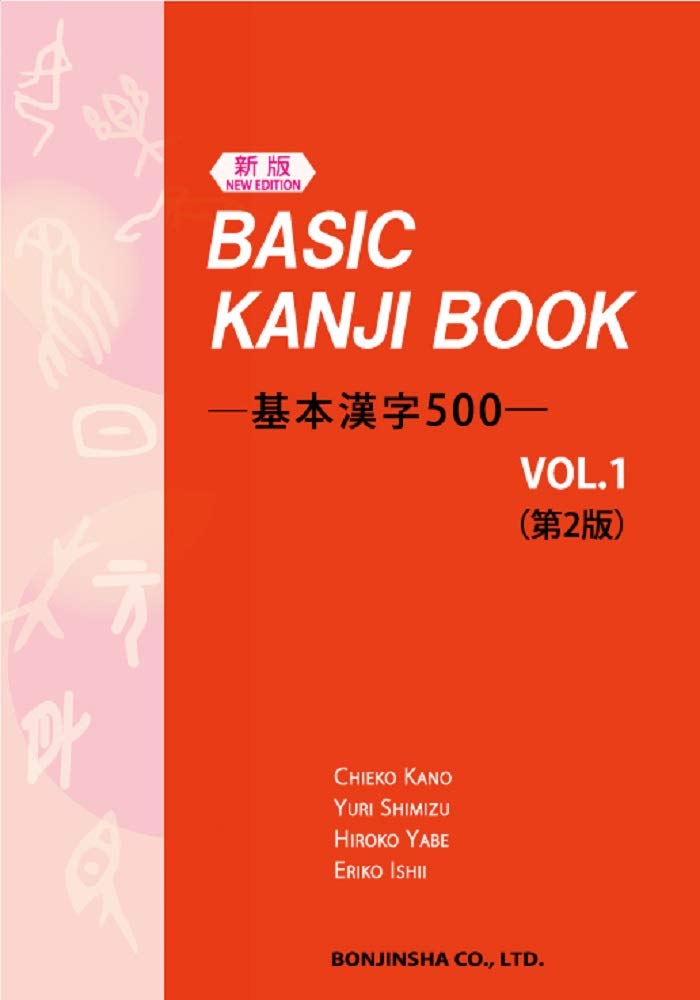
The first volume of the Basic Kanji Book published by Bonjinsha is a good book for beginners. You will learn 250 basic kanji the old-fashioned way, by writing them out stroke-by-stroke. This book also has a variety of writing and reading exercises and visual aids that will help you to remember these kanji in context.
Although practicing kanji by writing them out repeatedly may not seem like a practical long-term strategy, in the short term it will help you to remember the basic rules of stroke order and also to understand the visual balance of a well-written kanji. These are useful skills to have if you ever need to fill out documents, visa application forms, or simply write an address. Research has also shown that writing things out by hand is actually a very powerful aid for the learning process.
The Bonjinsha series continues with more books, but whether you continue with them beyond the first volume will depend on your study goals. If you are in a hurry to learn to read, or you are cramming for an exam, you might want to skip ahead to flash cards and mnemonics. But if you want to remember how to write the kanji as well as read them, then Bonjinsha is the way to go. Either way, the first Basic Kanji Book will give you a good foundation on which to base your further studies.
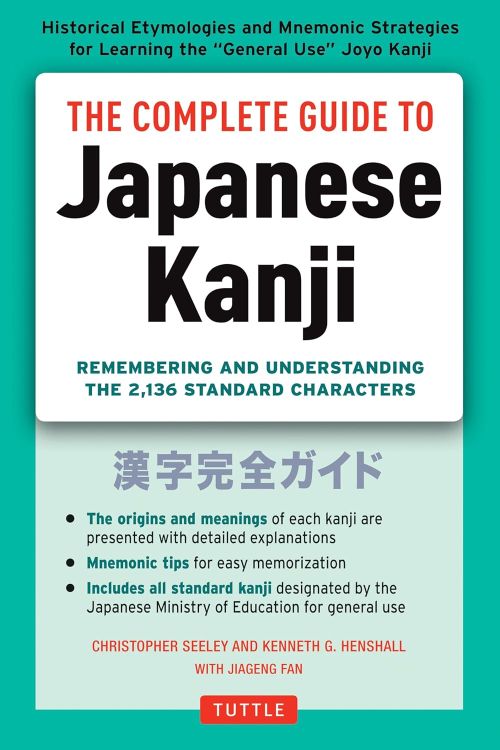
Seeley and Henshall’s Complete Guide to Japanese Kanji is an essential reference tool. Henshall breaks each kanji down into their component radicals, explains their etymology, and offers a suggested mnemonic for each kanji. Probably you will want to create your own mnemonics but Henshall’s suggestions are a good place to start.
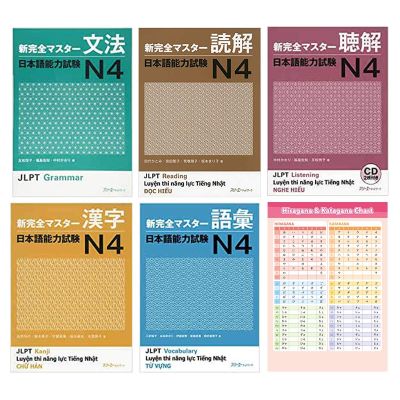
The Shin Kanzen Master (新完全マスター) series of textbooks is particularly recommended for the kanji and reading elements of the Japanese Language Proficiency Test.
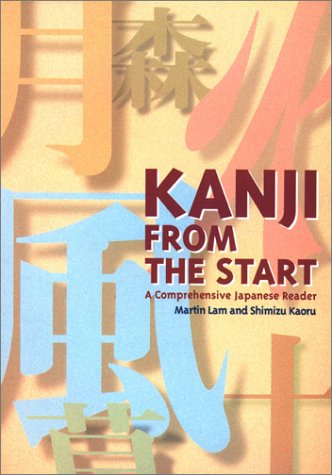
If you want to start reading practice, then KANJI FROM THE START: A Comprehensive Japanese Reader is a good place to wet your whistle. The book introduces around 600 kanji and 1,000 kanji compounds and places them in the memorable context of articles that start off easy and then dive into the realms of science, politics and economics. I can still remember the thrill of realizing I could understand scientific explanations in Japanese! I really enjoyed this book – and actually read it a few times over!
Memrise is a popular website and smartphone app which offers free digital flashcard sets and employs the Spaced Repetition System (SRS) to help you remember. This is useful aid for picking up beginner’s kanji, kanji radicals, or studying for tests.
The Midori Dictionary app for iPhone or iPad is a comprehensive Japanese>English and English>Japanese dictionary with lots of neat features. This was my go-to dictionary when I was studying for the JLPT – and still is. One of the really handy features is that you can bookmark words, or kanji, in sets and then turn those sets into flashcards. I had all of my kanji flashcards on my Midori app, so I could study anywhere, anytime.
News Web Easy is a website produced by NHK with simplified news stories and furigana readings for all kanji. It’s a great site for beginners who want to build up their kanji reading ability.
See also:
The Best Textbooks for JLPT Level N1
Full text by Micheál O’Luain. Top image by Stephen Yu on Unsplash. All rights reserved.