In which my old friend the manga translator Kumar Sivasubramanian shares how he used manga to learn Japanese, explains why manga is such a great study resource, and also gives us his personal manga-for-study recommendations. This interview was originally published on another website in 2019, but as that website has ceased to be, I’m reposting it here because Kumar is awesome and more people should be party to his awesomeness.
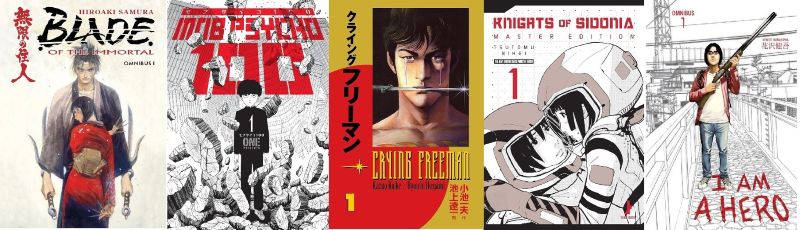

Kumar Sivasubramanian is an Indian-born Canadian who has been working as a professional manga translator for 24 years. Translating from Japanese to English, his prolific output includes such titles as BLADE OF THE IMMORTAL, I AM A HERO, MOB PSYCHO 100, KNIGHTS OF SIDONIA and CRYING FREEMAN. Now based in Australia, Kumar lived in Japan for 6 years, during which time he taught himself to speak and read Japanese. By his own admission manga was not only an integral part of that process, but a major impetus for his move to Japan in the first place. Clearly Kumar is the ideal person to speak to on the topic of manga as a language study resource!
Micheál O’Luain: How indebted to manga do you think you are personally regarding your own Japanese studies? Was it the manga that led you into Japanese or just something you picked up along the way?
Amazon.com
Amazon.co.jp
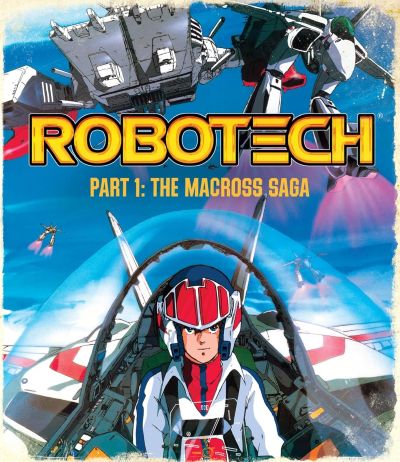
Kumar Sivasubramanian: For me, there was a definite through-line that started with anime. When I was around 12 I saw ROBOTECH (aka MACROSS) and GALAXY EXPRESS 999 on TV in the mid-80s. I loved them. That led me seek out more anime, which funneled into manga, which was only natural because I was already reading American comics. Anime and manga in English was relatively rare at the time, but the distinct character of it was still enough to turn me into a Japanophile. So, after I finished university, when the opportunity presented itself to live and work as an English teacher in Japan, I leapt at it. I don’t think I would have moved to Japan if it hadn’t been for that early exposure to anime and manga.
MO: Could you explain what it is about manga that appeals to you so much?
KS: You have to imagine being a kid watching GI Joe or Transformers in the early to mid-80s. Lasers knock people over and don’t do any other damage to them. Any time a jet is fired out of the sky, 100% you will see a parachute and the pilot floating to safety, unharmed. At the end of the episode, everything returns to whatever was the status quo at the start of the episode, and it’s like nothing happened. Same goes for any issue of Batman, Superman, or Spider-Man. Now, along comes ROBOTECH. Fighter jets explode: no parachutes. Major characters die, there is blood on screen, relationships change, the plot develops over 36 episodes. And that’s the end of the story! It doesn’t get milked for 50 years. This was mind blowing as a kid. And when you encounter other Japanese comics or anime, either intentionally or by accident, you find the approach is often the same: there was a genuine, thoughtful focus on storytelling, narrative, and characters. Is 90% of the Japanese manga and anime market commercialized and derivative? Yes, but there’s something less crass and cigar-chomping about it anyway.
MO: Tell me about how you studied with manga: did you have any special study methods? Or did you just read tons of stuff and absorb it naturally?
KS: When I got to Japan, I pounced on the manga. I never took a Japanese lesson, but I bought some textbooks and self-studied every night, and then I would “read” manga, usually only recognizing 1 or 2 words a page, but I just kept at it. I watched a lot of Japanese TV and never understood it either, but I kept at it. Drip by drip, like the formation of a stalagmite, my understanding of the language started to take shape. The manga was a definite part of the chemical makeup. The textbooks alone were not enough. And of course the manga alone would not have been enough. I would look up words sometimes, but would stop if it got boring or TOO difficult. I think the point is: you need a motivator that pushes you to consume as much Japanese as possible. Expose yourself to it as often as you can, and in as many forms as you can. I moved to Japan in 1998 without one word of Japanese. I did my first professional manga translation in 2002. But I want to add that even now, I’m looking up and learning new words on every page.
MO: Why would you personally recommend using manga for study purposes?
KS: The number one benefit of using manga for language learning is visual context. When someone says, “Have a seat,” and a character sits, that’s much easier than having pure text with no context, which when you’re just beginning can be frustrating or even completely inscrutable. You might argue that the motion of film would provide even more context, and that may be true for aural language, but trying to read Japanese subtitles at speed as a beginner can also be baffling. Manga gives you the visual context but also the ability to set your own reading pace.
MO: What titles in particular would you recommend for beginners?
Amazon.com
Amazon.co.jp
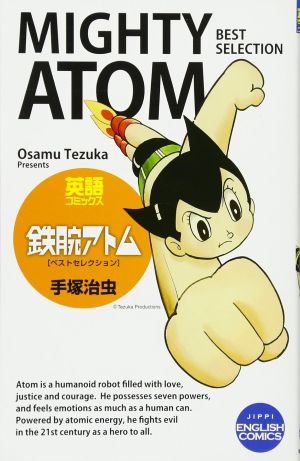
KS: Any manga which uses furigana is a good place to start. And it may be embarrassing, but I recommend kids comics like DORAEMON to start with. Also, even better than kids manga, Google around to see if you can find any bilingual manga. Bilingual manga is the best thing you can get. If you can find them, hoard them. (I think there are current bilingual editions of MIGHTY ATOM [ASTRO BOY] and Sailor Moon at least.) MANGAJIN’S BASIC JAPANESE THROUGH COMICS, if it’s still in print, is a fun and useful book as well. When you’re just starting out you may want to avoid melodramas (lots of emotions and pensive faces, but not much visual context), or Fantasy and SF series. I would flip through some comics and just see what grabs you, and also mix it up. Even if you only recognize 1 or 2 words on a page in the beginning, that’s good enough. Pick up the next comic and do the same, and repeat.
MO: What manga would you recommend for intermediate or advanced Japanese learners who may have previously not considered supplementing their studies with manga?
KS: Once you’re over the kids’ stuff, seek out manga that matches some of your interests or knowledge bases. For example, if you like golf, look for golf manga. If you like post-apocalyptic fiction, go look for FIST OF THE NORTH STAR. You’ll be able to fill in some gaps with your own knowledge, and you may be inspired to keep trying to read it even if the language level is still frustrating.
Amazon.com
Amazon.co.jp
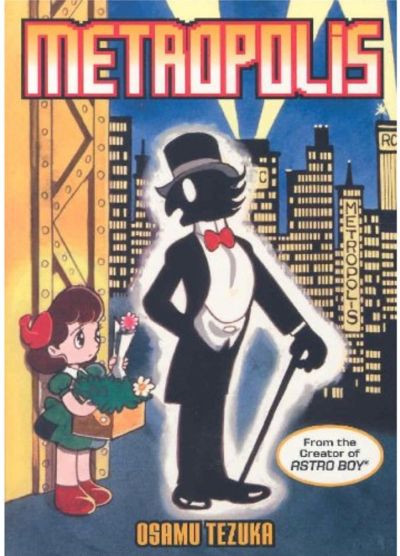
MO: Your first translation job was Osamu Tezuka’s METROPOLIS. That must have been quite a thrill for you. Can you describe your feelings when you first got that job?
KS: Well, it was my first job, so I obsessed over every word. I counted syllables and tried to match the number and even use English synonyms with similar sound forms. I have never approached a translation like that since, and, to be honest, I’ve never been able to bring myself to re-read it. Because I was so overly obsessed with the mechanics of the translation, the fact that it was Tezuka, the God of Manga, never really sunk in at the time. It was actually my wife who pointed it out to me later and said, “You must have felt honored to translate those books.” And I was like, “Holy Cow! It was an honor!” Looking back now, I’m still in awe. Having them on my resume has also led to me doing multiple Tezuka books with other publishers too.
MO: Do you still enjoy reading manga purely for pleasure – or is it all work related now?
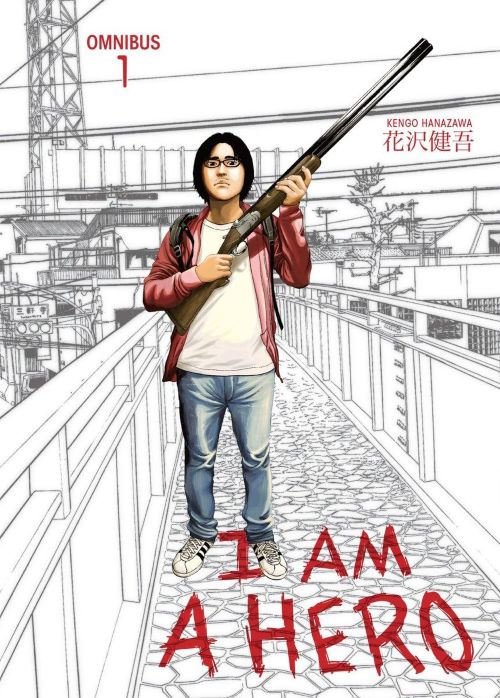
KS: It was all work-related for many years, but I do still love reading manga for pleasure when I get the chance, and I’ve been making more of an effort in the last year or two. Leiji Matsumoto’s GALAXY EXPRESS 999 is not available in English, so that’s one I still read in Japanese, as well as everything by Man Gatarou. I read a lot of manga in English though – Takehiko Inoue’s REAL (about wheelchair basketball), BAREFOOT GEN… I’m also lucky in that for me, often work is pleasure and a series like I AM A HERO is something I am equally as happy translating as I am reading.
Amazon.com
Amazon.co.jp
Find out more about Kumar, his translations and other writings on his website: https://www.kumarbooks.com/
Disclosure: Links to Amazon vendors on this page are affiliate links and the owner of this site may earn a commission from qualifying sales.
Full text by Micheál O’Luain and Kumar Sivasubramanian. Portrait of Kumar Sivasubramanian by Georgina Nebe. All rights reserved.